The call comes in a week later. A customer ordered six of one part number and received six of the part stored in the next bin over. Nobody on the floor remembers picking it, the paperwork all looks correct, and the only thing you know for certain is that what shipped isn't what was ordered.
That's the shape of a mispick. It's rarely a careless person. It's a process that asks somebody to match a printed line to a physical box four separate times without ever confirming that the match was right.
What a manual pick actually involves
Taking an item off a rack sounds like one action. On a paper pick list it's four:
- The picker gets a printed list of locations and quantities.
- They travel to the location and find the item in the bin or on the shelf.
- They read the quantity off the paper and count that many units into the tote.
- They mark the line as picked and send the order on to packing.
Every one of those steps can go wrong, and none of them include a check. The pick list records what the customer ordered. It never records what came off the shelf. By the time anyone compares the two, the box is on a truck.
The four ways a line goes wrong
The wrong item. Two part numbers that differ by one character, stored next to each other, in boxes that look identical from three feet away.
A missing line. The item is on the list and never makes it into the tote, usually because the picker got interrupted partway down a long order.
The wrong quantity. Counted by eye, or counted in the wrong unit of measure. Six cases instead of six eaches is a mispick even though the number matches.
A unit that shouldn't have shipped. Crushed corner, torn packaging, or in a food operation, a lot that's past its date. The part number matches the order, so nothing about the pick itself looks wrong.
What one mispick costs after it ships
Investigating takes real time. Someone pulls the original order, compares it against the shipping paperwork, and tries to reconstruct what actually went in the box. The pick list won't settle it, because it only shows what was supposed to happen.
If the error turns out to be yours, the work stacks up quickly. Someone prepares a no-charge invoice, writes new pick instructions, and the order gets picked and packed a second time. You pay freight twice and can't bill either leg. Meanwhile the wrong item is either sitting at the customer's site waiting on a return label or it's gone for good.
Then there's the item itself. Until it comes back and gets received, your system still counts it as on hand, so the next order that needs it will short.
Half-picked orders are their own problem
Running lean means you'll sometimes pick part of an order and hold it while the rest of the goods are still in transit. That's a reasonable thing to do. It goes wrong when the held stock has no clearly marked home and no record attached to it.
If the overflow area isn't somewhere the whole floor team knows about, or the totes aren't labeled with the order they belong to, that product gets put back into stock by somebody who's just clearing space. The original order then ships short, or it gets picked again from scratch while the first pick sits in a corner.
The conditions that make errors more likely
Errors cluster, and they cluster around conditions you can name:
- Overtime. A picker on hour ten is slower and less accurate than the same picker on hour four.
- Seasonal and temporary staff who don't yet know which two bins are easy to confuse.
- Poor lighting in the upper racks, where a label has to be read at a distance.
- Similar part numbers slotted next to each other, which is a putaway decision rather than a picking one.
- Pressure to clear a wave before a carrier cutoff.
None of those are character problems. They're all things you can change.
What a scan actually catches
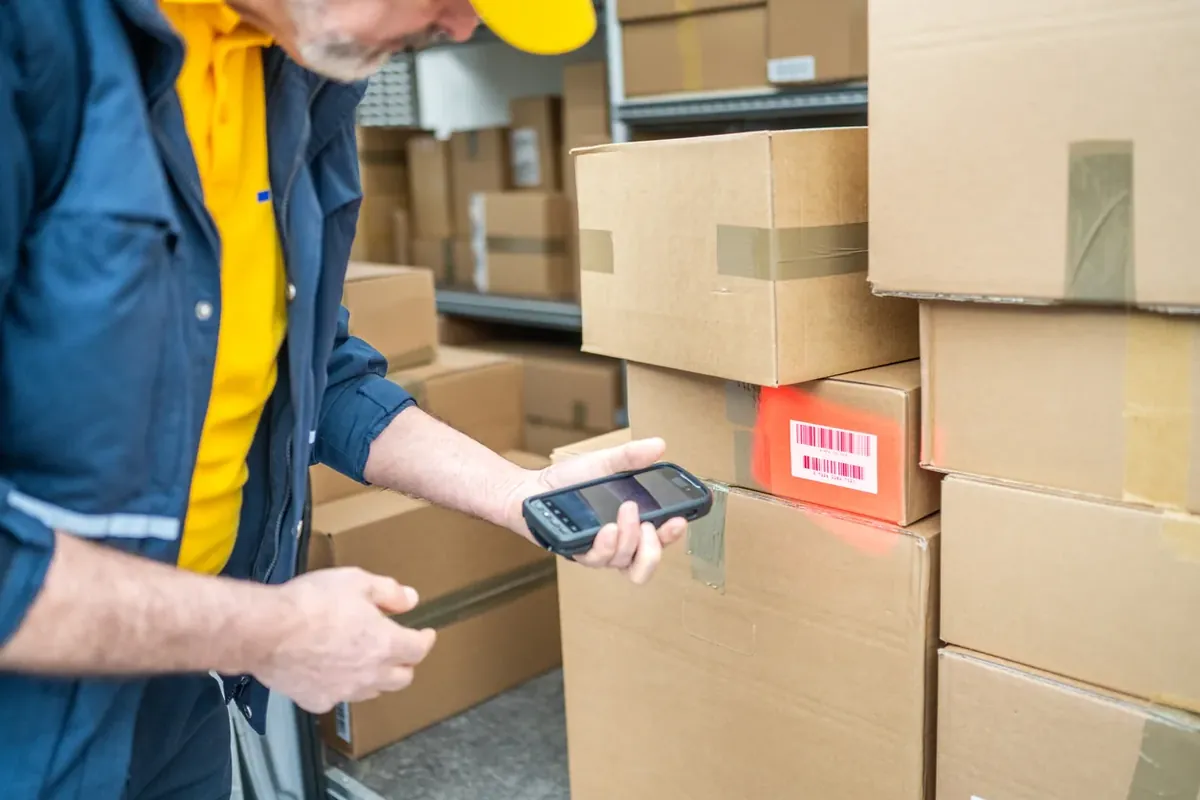
Scanning replaces step four. Instead of the picker asserting that the right item went in the tote, the device compares the barcode on the box against the line on the order and either accepts it or refuses it. The refusal happens while the picker is still standing at the bin, which is the only point in the whole process where fixing it is nearly free.
Quantity gets entered rather than assumed, and the unit of measure comes from the item record rather than from somebody's read of an abbreviation on a printout. A line that hasn't been scanned is visibly unfinished, so an interrupted order doesn't quietly ship short.
The devices are also easy to hand to somebody new. A picker who has never used one can be productive the same day, which matters most in exactly the seasonal-staffing situation where paper errors spike.
What it doesn't catch
A scan confirms that the label on the box matches the order. It can't tell you the label itself is wrong. If receiving puts the wrong product in a bin, or a supplier ships a case labeled with the wrong part number, picking will faithfully confirm the error and send it out.
That's worth knowing before you start, because it tells you where to look when accuracy doesn't improve as much as you expected. Picking accuracy inherits whatever receiving and putaway hand it.
Where to start
Pull the credit memos you've issued for wrong-item claims and sort them by part number. Look for concentration. If a handful of part numbers accounts for most of the claims, those pairs are almost always stored together or named alike, and re-slotting them is worth doing whether or not you scan. Those same lanes are where scanning pays for itself first, because they're where the process is failing most often and where a refusal at the bin saves the most downstream work.