A smartphone running a scanning app and a rugged mobile computer will both read a barcode, which is why the two get treated as interchangeable when somebody is pricing out a deployment. They're built for different jobs, and the difference tends to show up after the pilot rather than during it.
What a mobile computer is
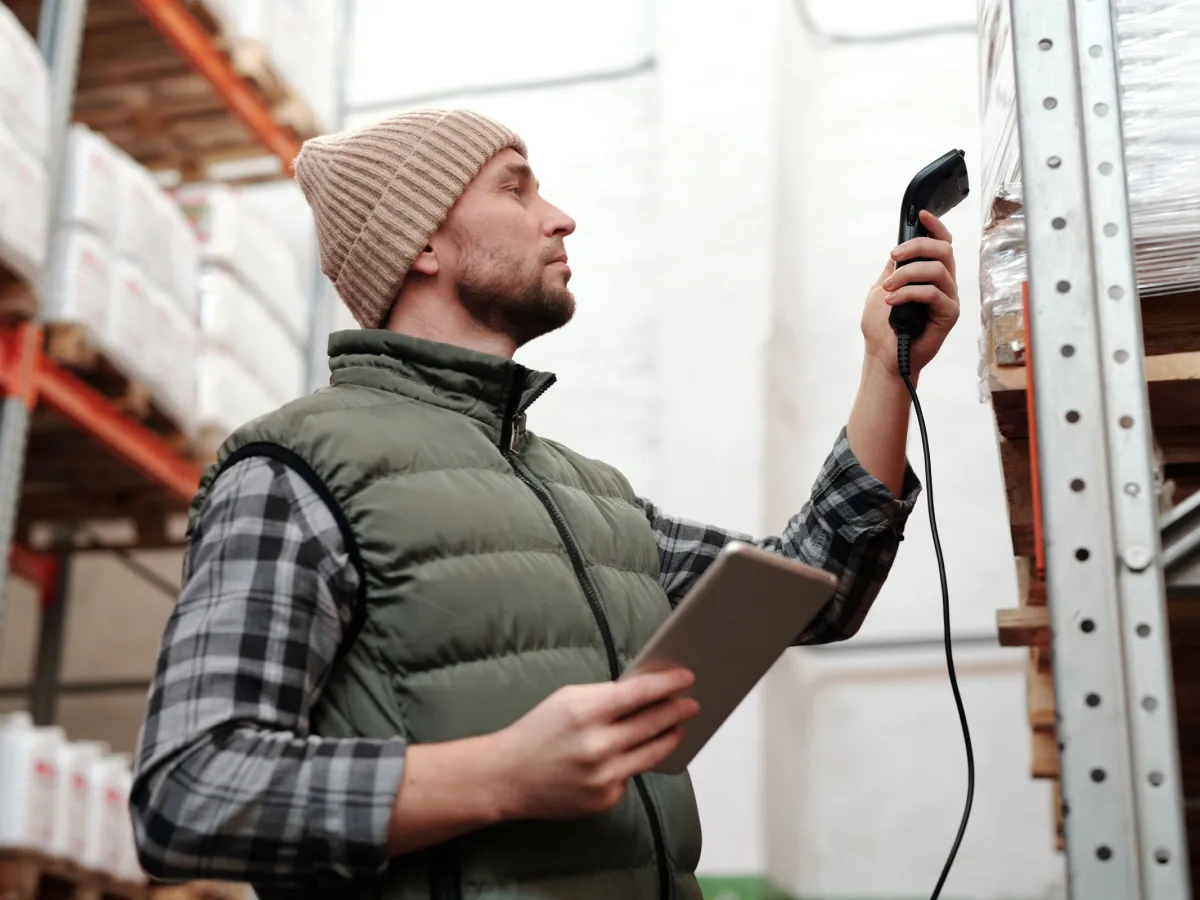
A mobile computer, sometimes called a portable data collector, is a barcode scanner with a screen, an operating system, and enough storage to run applications on its own. That last part is the line between it and a plain barcode scanner. A tethered scanner passes what it reads to a host machine and does nothing else, while a mobile computer is the host. It holds the application and the data, so a picker can keep working through a network drop and sync once the connection comes back.
Most current rugged handhelds run Android. They also come in shapes a phone doesn't: pistol-grip units for high-volume scanning, wearable ring scanners worn on a finger, and vehicle-mounted terminals bolted to a forklift.
Where a smartphone differs
The scan engine is the first difference. A phone camera decodes a barcode from a photo, which works well on a clean label at arm's length and gets slow on a damaged label, a label under shrink wrap, or a pallet position well overhead. A dedicated imager or laser engine is built for range, for poor contrast, and for decoding continuously through a full shift.
Then there's the build. Rugged devices are made to survive being dropped onto concrete, sealed against dust and water, and fitted with hot-swappable batteries sized for a shift. A consumer phone has a sealed battery and a glass face, and its warranty won't cover a fall from a forklift.
The last difference is management. Mobile computers are normally deployed with the applications and configuration already loaded and locked down, so every unit in the building behaves the same way. Phones are personal devices by design, which makes standardizing them a separate project.
Which one a job needs
If a handful of people scan occasionally, at a desk or a counter, a phone is often enough. If scanning is continuous through the shift, or happens in cold, dust, or at height, that's what the rugged device is for. The mistake worth avoiding is deciding it on a pilot of ten scans in a clean office, because that's the one scenario where both devices look identical.