A cold storage building has two jobs that pull against each other. It has to hold product at a temperature that keeps it safe to eat or safe to inject, and it has to let people and pallets move in and out all day. Every door that opens and every pallet that crosses a threshold is heat you then pay to remove again.
That tension explains most of the decisions below. The refrigeration itself is well-understood engineering. What's hard is running a normal warehouse process inside it.
Heat gets in through the openings, so plan around the openings
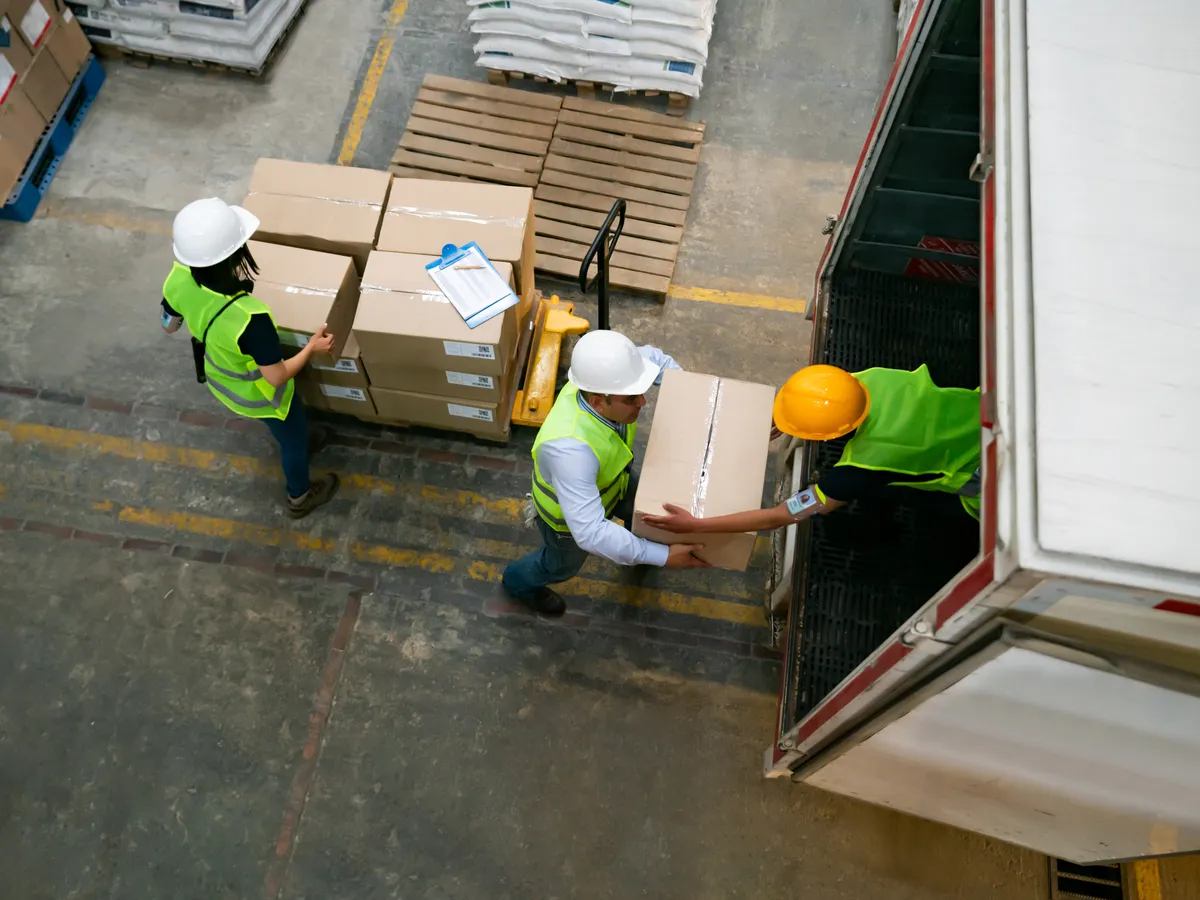
A lot of the energy cost in a freezer isn't holding temperature. It's recovering from the moments the envelope is broken: dock doors, the transition between a chilled staging area and a deep freeze, and the gap where a pallet sits half in and half out while somebody looks for a location.
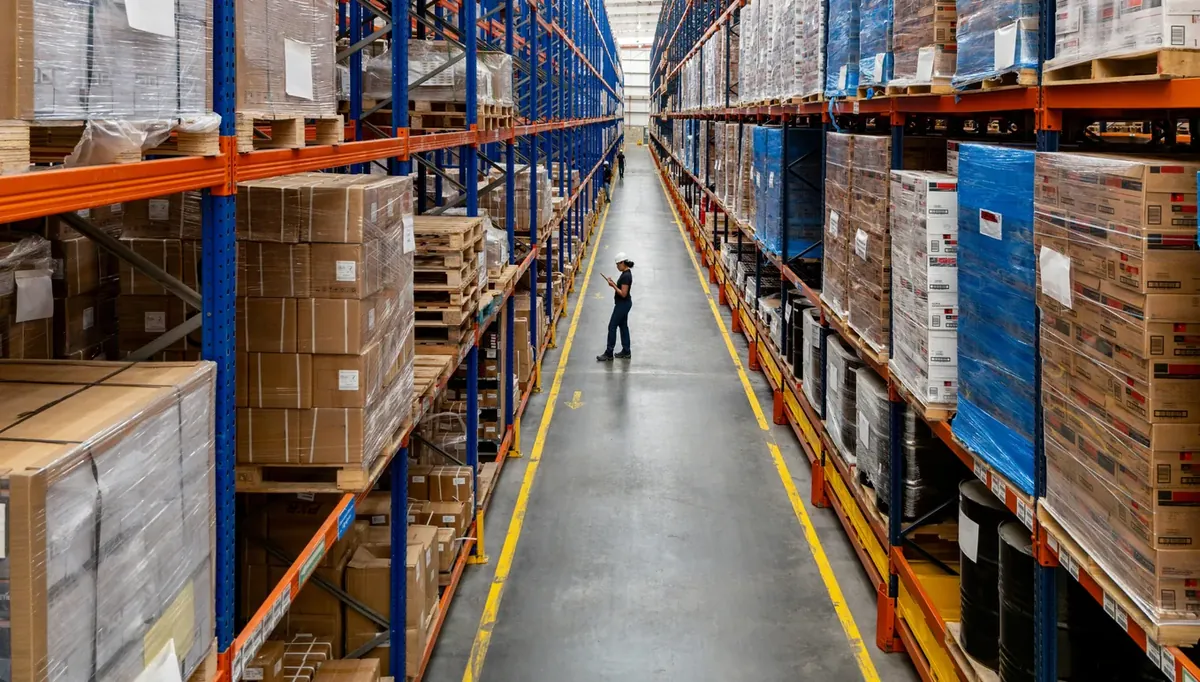
Insulated curtain walls let you split one building into zones held at different temperatures rather than chilling the whole footprint to the coldest spec any single SKU requires. Rapid roll doors and automatic pallet doors do the same thing at a smaller scale, opening for the load and sealing behind it instead of standing open for the length of a picking run. High-density racking helps for a related reason. Storing the same volume in a smaller cube leaves less air to cool and less roof surface to lose it through.
Equipment fails differently in the cold
Condensation is the thing that catches people out. A handheld that's been sitting in a freezer aisle and then gets carried into warm staging will fog, then wet, inside the housing as well as on the screen. The same happens to forklift-mounted terminals and to label printers moved between zones.
Freezer-rated hardware exists for exactly this, with sealed housings, heated scan windows and displays, and heaters in the battery compartment. Standard commercial devices will work in a freezer for a while and then stop, usually by way of a battery that reads full and quits early, because lithium cells lose usable capacity as temperature drops.
Labels have the same problem in a different form. Adhesive that grabs fine at room temperature won't bond to a frosted carton, and a label applied warm can lift once the pallet goes into the freezer. Freezer-grade adhesive and label stock rated for the temperature you're actually storing at are worth specifying before the first roll gets ordered, because a label that falls off in a rack is a pallet nobody can identify without opening it.
Cold gear and break scheduling are an operations decision
Someone who is cold works slower and stops in warm spots. That shows up in picks per hour before it shows up anywhere else, and it shows up as doors propped open.
OSHA's cold stress guidance is the reference worth working from here. It describes the recognized cold-related conditions, including hypothermia, frostbite, trench foot and chilblains, and it recommends scheduling frequent short breaks in warm dry areas and layering rather than one heavy coat: an inner layer that moves moisture away from the skin, a middle insulating layer, and a wind and water resistant outer layer (OSHA, Winter Weather: Cold Stress).
Gloves are the detail that most affects throughput, because a glove thick enough to work in all day is a glove that can't hit a small keypad or a capacitive touchscreen. Devices with large physical keys, or a scan trigger you can pull with a gloved hand, keep the floor team from pulling gloves off between scans.
The records are what auditors and recalls run on
Temperature logging is usually already handled. Fixed sensors write continuously and alarm on excursions, and that part tends to be solid. The gap is normally the link between the temperature record and the specific pallets sitting in that zone at that time.
That link is a scanning problem, not a refrigeration one. If receiving assigns a license plate to every inbound pallet and each move gets scanned, you can answer what was in aisle four between 2am and 6am on the night the compressor tripped without walking the building. If pallet locations live on a whiteboard, you can't, and the safe answer becomes all of it.
For food specifically, the FDA's Food Traceability Rule under section 204 of the Food Safety Modernization Act adds recordkeeping requirements for foods on the Food Traceability List, which includes a number of refrigerated categories. The original compliance date was January 20, 2026. FDA proposed extending it by 30 months, and Congress has since directed the agency not to enforce the rule before July 20, 2028 (FDA, FSMA Final Rule on Requirements for Additional Traceability Records for Certain Foods). Whether a given operation is covered, and exactly what it has to keep, is set out in the rule itself.
Counting, when time in the zone is expensive
Cycle counting in a freezer costs more than cycle counting anywhere else, because every minute a person spends in the zone is paid for twice, once in labor and once in the heat they brought with them. That pushes cold storage operations toward counting at the pallet or license plate level rather than opening cases, and toward scanning at every touch so the record stays close to correct between counts.
It's the same practice an ambient warehouse uses, with much less tolerance for any step that requires somebody to stand still and write.
A freezer is sometimes a separate building rather than a zone inside an existing one. That puts it in the same territory as keeping one stock record across two sites, with the added constraint that one of the two costs you money every minute somebody stands in it.