The kind of line that shows up on a warehouse software quote:
Warehouse software platform (WMS / WCS / WES), single site, annual subscription: $______
Three acronyms at one price, and they name different jobs. A warehouse control system (WCS) runs automated equipment, such as conveyors, sorters and robots. A warehouse management system (WMS) runs the inventory and the people who move it. A warehouse execution system (WES) hands out the work, and it's the muddiest of the three.
Buy for the machines you actually have. A WCS sits below the WMS and takes its orders from it. It carries out whatever the WMS sends down, so outside the equipment it runs, it can't make your inventory right. If nothing on your floor moves product by itself, the WCS has nothing to control, and the money went to the wrong layer.
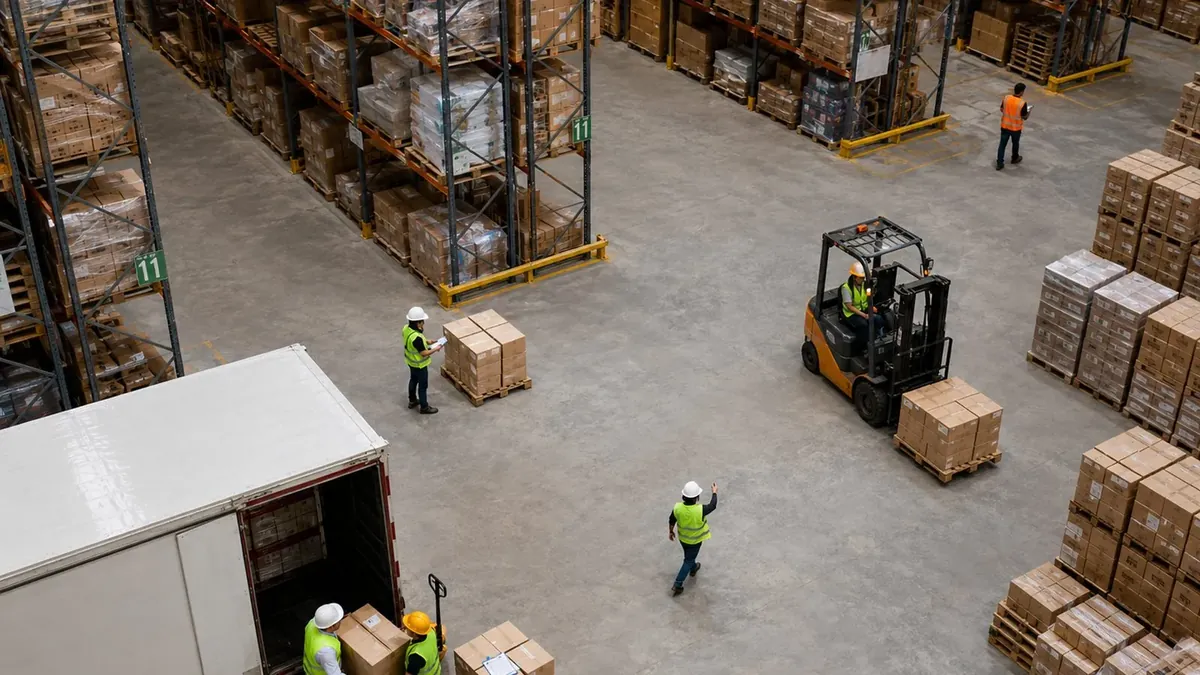
This is written for floors like mine: people, forklifts and handheld scanners. For the wider choice, see our posts on choosing a warehouse system.
Do you need a warehouse control system?
- Walk the building and count what moves product with nobody driving it. Forklifts don't count. They have drivers. Zero means start with the WMS.
- Your expensive mistakes are people mistakes the system never checked: stock in the wrong bin, a wrong count, the wrong item in the box. That's WMS work.
- One machine that works on its own? Ask the seller what the WCS would coordinate. Control earns its place when several machines pass work between them.
- Adding automation in one area: get the WMS right first. The WCS will take its orders from it.
- A WES on the quote: ask what it would hand out that the WMS's directed picking doesn't. By 2020, trade press was reporting a next generation of WES addressing manual buildings too.
- Several automated systems already hand work to each other, say conveyor to sorter or storage system to pick station. You need a WCS; skip to the last section.
I learned the third check at a manufacturer with three sites. A quote came in with a WCS line, and I asked the rep what it would control. "Your future automation," he said. We had forklifts, carts and a label printer, so the line came off the quote.
What is a warehouse control system?
A warehouse control system is software that manages a warehouse's automated equipment: conveyor systems, automated storage and retrieval systems (AS/RS) and robotic pickers. It sits between the WMS or ERP and the equipment and sends the machines their instructions in real time.
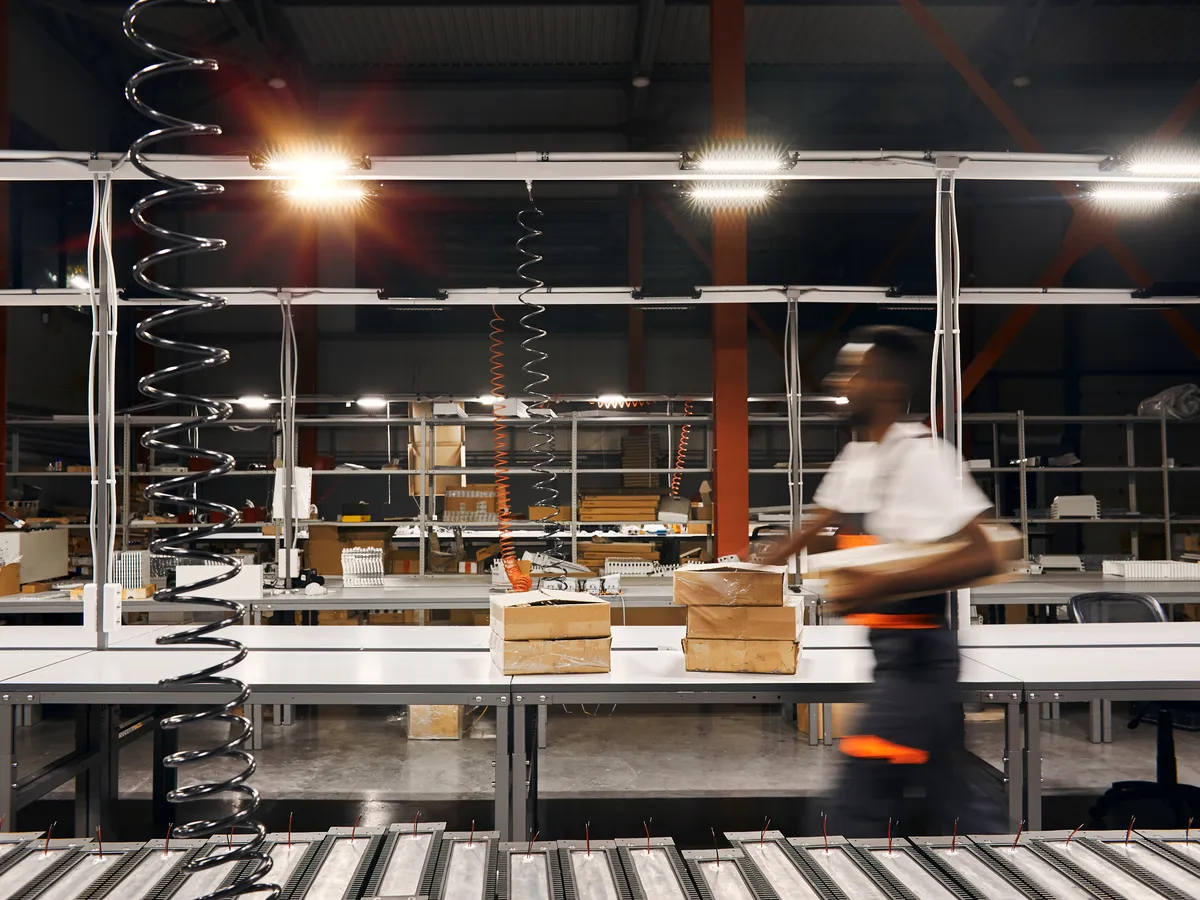
In practice, warehouse control systems run conveyors, carousels, palletizers, sorters that divert picked goods to staging lanes or chutes, and automated guided vehicles that follow set paths.
That's close to how MHI describes a WCS on its blog: a bridge between the two layers. MHI is the material handling industry association, and its post is straight about where the job gets hard: "multiple systems from different Original Equipment Manufacturers (OEMs)", such as one maker's conveyor feeding another maker's sorter.
What a WMS does instead
MHI puts the contrast plainly: "A WMS focuses on tasks like inventory control and order management. In contrast, a WCS manages real-time control of automation equipment."
A WMS goes after the bin, count and box mistakes by directing and checking the work. Directed putaway handles the wrong bin: the system says which bin, and the operator scans it to confirm. The system assigns counts and checks them, bin by bin. And each item gets a scan before it ships, which is how the wrong one stays out of the box. Our page on what warehouse software adds goes deeper on the WMS side.
I pushed for the wrong layer once. We kept shipping wrong items, and I wanted a short conveyor at the end of the pack line as a checkpoint, picturing a scanner the quote didn't include. The second-shift pack lead, who had already suggested a scan at the bench, asked what the conveyor would know about what was in the box. Ours only moved boxes. We went with her scan at the bench, and that fixed it.
WCS vs WMS, side by side
| Warehouse control system | Warehouse management system | |
|---|---|---|
| Directs | Machines | People and inventory |
| Talks to | The equipment; up to the WMS or ERP | The ERP; down to handhelds |
| Pace | Real-time machine control | Real time, scan by scan as each task is confirmed |
| Typical tasks | Conveyor routing, sorter diverts, AS/RS moves | Receiving, putaway, picking, counts, packing |
| You need it when | Several automated systems work together | People move the stock |
WES vs WMS: where a warehouse execution system fits
A warehouse execution system sits between the WMS and the floor. When Modern Materials Handling reported in 2020, the WMS was the part that "manages inventory and receives orders from the order management system," and those orders went on to the execution system for fulfillment. A vendor executive quoted in the piece described a WES that hands a worker one task at a time and waits for it to finish.
The article also describes a newer WES aimed at facilities that "still rely on highly manual processes, like pick to tote, pick to pallet and pick to cart." Two WMS vendors quoted there argue that in conventional facilities, the WES doesn't have to come from an automation provider. One asks why you'd "bring in another vendor if the functionality is already baked into the WMS?" They sell WMS, so weigh that, and read a 2020 piece as direction, not a map of today's products.
If you run robots or conveyors next to people, dividing the work is a bigger job; see when a tier 1 WMS that splits work between robots and people makes sense.
How the layers stack
- ERP or financial system: the books
- WMS: inventory and the people who move it
- WES, where there is one: hands out the work
- WCS: the machines
- The equipment itself
Line 2 is as far down as I usually got. The exception was one plant at that three-site manufacturer: an automatic stretch wrapper where finished pallets came off production, and a receiving dock on clipboards. A little of line 5, nothing on lines 3 or 4. Its receivers kept asking for a system that told them which bin to use and checked it, which is line 2 work.
In a building with no machines, lines 2 and 3 overlap, because both hand tasks to people. Lines 3 and 4 blur too; our warehouse software page puts WCS and WES in one row.
Endpoint works on line 2. Endpoint Cloud is a WMS that directs receiving and putaway on the floor, connects to your financial system and captures that work in real time.
If your dock is still on paper, line 2 means a scan at each step. Scanning the paperwork afterward is something else; there's a post on the difference between digitizing paper and changing the process.
Three questions that come up
What is the difference between a WCS and a WES?
A WES decides which work goes out next and to whom. A WCS runs the machines that carry that work out in real time. Without automation there's no WCS, and a WES, if there is one, hands its tasks to people.
What is WCS in a warehouse?
WCS stands for warehouse control system, the software that tells the sorter which chute a carton goes to and keeps the rest of the automated equipment on the same plan.
What is the difference between a WMS and an ERP?
A WMS directs and checks the floor work, from receiving through shipping, and runs inside the ERP or connects to it. The confirmed moves then report to the ERP. Our warehouse software page covers where one stops and the other starts.
When you do need a warehouse control system
Once machines start handing work to each other, the answer flips. A WMS on its own isn't built for real-time control of equipment. You need a WCS, whose core job is keeping that equipment working as one.
In that building, put most of the evaluation into how the WCS and the WMS work together. Ask what the floor does when the conveyor stops, and whether people can keep receiving and picking from the WMS while the WCS is down. Ask to visit a building where the same WMS and WCS already run together, and go on a busy day.
That's the building a WCS line on a quote was meant for.